The Complete Oil-Based Skincare Ritual for Pakistani Women — The Ecobliss C01 Way
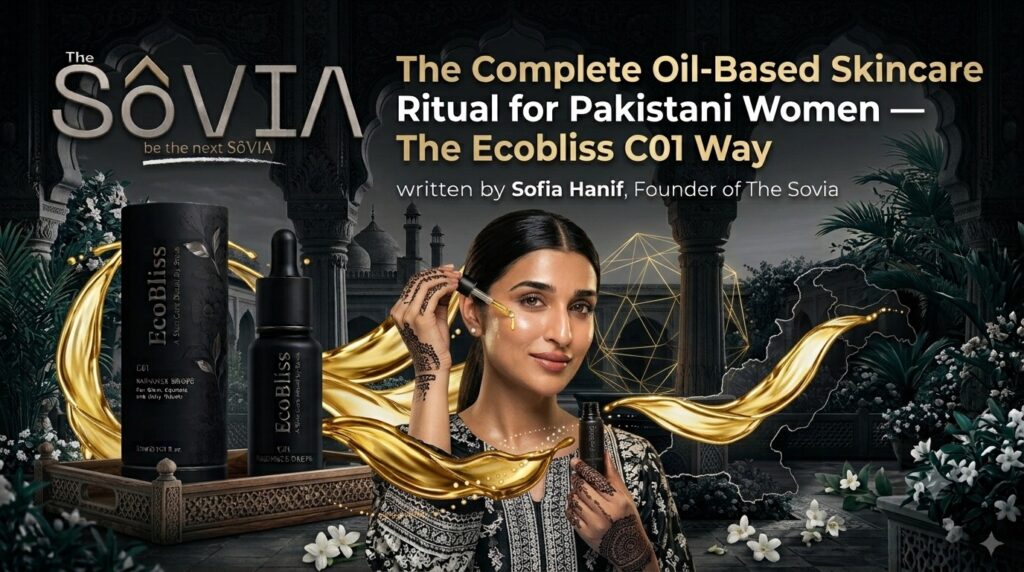
There is a persistent myth in Pakistani skincare culture that oily skin and face oils cannot coexist. That anything called an “oil” will clog pores, break you out, and make a humid July morning feel even more suffocating.
The Ecobliss C01 Radiance Drops exist to dismantle that myth — completely.
C01 is Ecobliss’s first and signature product: a multi-botanical radiance oil made from nine carefully selected plant-based ingredients, formulated specifically for the skin realities Pakistani women live with every day. Strong sun. Dust and pollution. Air conditioning that strips moisture. Humidity that drives oil production up. Seasonal swings between Karachi’s coastal heat and Islamabad’s dry winters. Hard water that leaves a mineral film on skin. And the relentless expectation to look radiant through all of it.
C01 does not fight your skin. It works with it — delivering the lipids, antioxidants, and fatty acids your skin is already trying to produce, so it can stop overcompensating and start glowing.
This is the complete ritual guide for how to use it.
Why Pakistani Skin Needs an Oil-Based Ritual
The assumption that oil is the enemy of Pakistani skin gets the biology exactly backwards.
Pakistani skin — predominantly Fitzpatrick types III to V — has a higher melanin content that offers some UV protection but also makes post-inflammatory hyperpigmentation significantly more common. When skin is stressed, stripped, or inflamed, melanocytes overreact and deposit excess pigment. The result is the dark spots and uneven tone that Pakistani women work tirelessly to fade. The root cause is often not the skin itself — it is a compromised skin barrier that cannot protect itself from the stressors it faces daily.
The skin barrier is built from lipids: fatty acids, ceramides, and natural oils produced by the sebaceous glands. When that barrier is intact, skin retains moisture, reflects light evenly, and recovers quickly from environmental stress. When it is damaged — by harsh cleansers, over-exfoliation, pollution, or simply the relentless demands of Pakistan’s climate — skin becomes reactive, dry, dull, and prone to both breakouts and hyperpigmentation.
This is where botanical face oils like the Ecobliss C01 Radiance Drops intervene. Plant-based oils do not just sit on top of skin. The right botanical oils — particularly those with a molecular structure close to the skin’s own lipids — actually penetrate and reinforce the barrier, replacing what the environment strips away.
Pakistan’s climate creates a specific, compounding challenge that C01 was designed to address:
- Sun exposure depletes the skin’s natural antioxidant reserves, accelerating dullness and pigmentation
- Dust and pollution create oxidative stress that breaks down collagen and clogs pores
- Dehydration from heat and air conditioning drives the skin into oil-overproduction mode
- Hard water leaves mineral deposits that block product absorption and disrupt the acid mantle
- Seasonal dryness in winter months collapses the barrier entirely, causing flakiness and sensitivity
The C01 formula addresses each of these challenges — not with a single hero ingredient, but with nine botanicals working together as a complete system.
Meet the Ecobliss C01 Radiance Drops: The 9-Ingredient Formula
C01 is not a product that hedges its bets with a long list of trendy ingredients at low concentrations. Every ingredient in C01 earns its place with a specific, documented job — and together they form a ritual oil unlike anything else available for Pakistani skin.
Jojoba Oil — The Skin Mimic
Jojoba oil is the most structurally unique ingredient in the C01 formula. Technically not an oil at all — it is a liquid wax ester, chemically closer to the wax esters in human sebum than to any other plant oil. This similarity is what makes it the intelligent foundation of the C01 blend.
When jojoba is applied to skin, it does something counterintuitive: it signals the sebaceous glands to slow down their own oil production. This is known as sebum substitution — the skin’s lipid-sensing machinery recognizes “enough lipid is present” and dials back production. The practical result for Pakistani women with oily or combination skin is that regular jojoba use leads to less overall shine and congestion over time — not from stripping, but from giving the skin what it was overproducing to begin with.
Jojoba is non-comedogenic (it will not clog pores), fast-absorbing, and leaves a dry, matte finish — making it one of the rare oils that works in Karachi’s July heat without feeling suffocating. It is also anti-inflammatory, calming active breakouts and reducing redness.
Argan Oil — The Barrier Nourisher
Argan oil — sourced from the kernels of the Moroccan argan tree — is one of the most studied botanical oils in dermatological literature. A 2024 peer-reviewed analysis published in PMC (MDPI Nutrients) confirmed its documented effects: daily topical application improves skin elasticity, restores barrier function, and maintains the water-holding capacity of skin exposed to environmental stressors.
Argan oil is rich in oleic acid and linoleic acid — a dual fatty acid profile that provides both deep nourishment and anti-inflammatory activity. The oleic acid penetrates into the deeper layers of the skin for lasting softness; the linoleic acid reduces the kind of low-grade inflammation that sits under most Pakistani skin’s surface concerns (breakouts, redness, uneven tone) without being visible.
Its antioxidant content — tocopherols, phenolic compounds, and carotenoids — makes it particularly valuable as a protective ingredient in Pakistan’s high-UV, high-pollution environment. Research notes argan’s specific effectiveness as an after-sun protective ingredient, neutralizing the oxidative cascade triggered by UV radiation before it can deposit into pigmentation.
Rosehip Seed Oil — The Radiance Restorer
Rosehip seed oil is cold-pressed from the fruit of the Rosa canina plant and is one of the most vitamin-dense oils in C01. It contains natural Vitamin A (encouraging new cell turnover), Vitamin C (antioxidant protection and melanin regulation), lycopene and beta-carotene (skin-brightening), and essential fatty acids — particularly linoleic acid, which is directly deficient in acne-prone skin.
A 2024 PubMed-indexed review confirmed rosehip’s documented activity against hyperpigmentation, scarring, melasma, and sun-damaged skin — all top-tier concerns for Pakistani women navigating a high-UV climate. Its Vitamin A content does what bakuchiol and retinol do chemically: it stimulates the skin’s cell renewal cycle, gradually bringing brighter, more even-toned skin to the surface over consistent use.
For Pakistani skin with post-acne marks, sun-induced dark spots, or the kind of general dullness that accumulates from city pollution, rosehip seed oil in C01 is doing the long-term brightening work every time you apply it.
Squalane — The Lightweight Hydrator
Squalane is a hydrogenated form of squalene — a lipid naturally produced by human skin that accounts for a significant portion of the skin’s own sebum. The skin’s natural squalene production begins declining in the mid-twenties; topical squalane replaces that deficit, restoring the skin’s own cushion of hydration.
What makes squalane exceptional for Pakistani skin is its molecular size: it is small enough to penetrate quickly and deeply, yet stable enough not to oxidize in heat or light the way many heavier oils do. It absorbs in seconds, leaves zero greasy residue, and is universally compatible with every skin type — including oily, sensitive, and acne-prone.
In the C01 blend, squalane serves as the lightweight anchor that makes the richer oils in the formula feel weightless on skin. It is the reason C01 absorbs quickly rather than sitting on top — and it is the reason the formula works in summer heat without feeling heavy.
Pomegranate Seed Oil — The Antioxidant Shield
Pomegranate seed oil is extracted from the seeds of Punica granatum and contains a rare fatty acid — punicic acid, an omega-5 conjugated linolenic acid — that gives it a degree of antioxidant potency unusual in plant oils. Research published in PMC documented pomegranate’s anti-inflammatory, antioxidant, and skin-renewal supporting properties, noting its ability to stimulate keratinocyte proliferation (the cells responsible for forming new skin).
For Pakistani skin navigating daily pollution in cities like Karachi and Lahore, pomegranate seed oil in C01 is working as an environmental shield. Free radicals generated by UV radiation and particulate matter in the air create oxidative stress that breaks down collagen and triggers pigmentation. Pomegranate’s antioxidant compounds — polyphenols, flavonoids, ellagic acid — neutralize those free radicals before they can complete that cascade.
The visible result is skin that maintains its glow even on high-pollution days, rather than looking dull and grey by afternoon.
Marula Oil — The Silky Nourisher
Marula oil is extracted from the seed kernels of the Sclerocarya birrea tree and has a fatty acid chain length profile — spanning C14 to C22 — that closely mirrors the ceramides found in human skin. This structural alignment makes marula oil exceptionally efficient at reinforcing the skin barrier, restoring suppleness, and supporting moisture retention.
Notably, research confirms that despite sharing a similar fatty acid profile with olive oil, marula oil demonstrates approximately ten times greater resistance to oxidative degradation — meaning it stays stable on skin longer and continues working without turning rancid in heat or exposure to air. For Pakistan’s warm climate, this oxidative stability is practically important: many cheaper oils go rancid quickly and can actually trigger skin irritation when they do.
Marula’s high oleic acid content makes it deeply nourishing for skin that is rough, stressed, or depleted from seasonal dryness. In C01, it is responsible for the silky, luxurious finish the oil leaves on skin — the sensation that the skin has been fed, not coated.
Vitamin E (Tocopherol) — The Preservation Antioxidant
Vitamin E (tocopherol) in the C01 formula performs two distinct jobs simultaneously: it protects the skin, and it protects the product.
As a topical ingredient, Vitamin E is a fat-soluble antioxidant that neutralizes free radical damage in the skin’s lipid layer — the same oxidative damage caused by sun exposure, pollution, and environmental stressors that C01’s other ingredients are also fighting. It supports the skin barrier’s integrity, helps maintain softness and comfort, and has documented wound-healing and scar-supporting properties that are particularly relevant for skin recovering from breakouts.
As a formula ingredient, Vitamin E acts as a natural preservative — slowing the oxidation of the other oils in C01 and extending the shelf stability of the blend. Well-formulated botanical oils with adequate Vitamin E last significantly longer before going rancid than those without it.
Rose Essential Oil — The Ritual Anchor
Rose essential oil in C01 operates at the intersection of skincare and sensory experience — and both dimensions matter.
At a skincare level, rose essential oil has documented calming and anti-inflammatory properties, helping to reduce the appearance of redness and supporting a balanced, healthy-looking complexion. Its natural constituents — including geraniol, citronellol, and linalool — have been studied for their soothing effects on stressed skin.
At a ritual level, rose is the scent that transforms applying skincare into something intentional. The act of pressing C01 between your palms, warming the oil, and inhaling that moment of rose before applying it to your face is a five-second reset in the morning or evening. That is not incidental to the Ecobliss philosophy — it is central to it. Self-care is not only what the ingredient does to your skin. It is what the practice does for your state of mind.
Geranium Essential Oil — The Balancing Note
Geranium essential oil has a long history of use in botanical skincare for its balancing effect on skin that oscillates between oily and dry — making it particularly relevant for Pakistani combination skin that is oily in summer and tight in winter.
Beyond its skincare function, geranium’s refreshing, uplifting aroma is the complementary note to rose in C01’s scent profile — creating a fragrance experience that is botanical and grounding rather than synthetic and overpowering.
Lavender Essential Oil — The Evening Signature
Lavender essential oil is the nighttime heart of C01’s aromatic experience. Its calming, stress-reducing properties have been studied extensively — and its role in the C01 formula is to signal the body’s shift from active to restorative.
When applied as part of an evening ritual, lavender in C01 creates a sensory cue that the work of the day is done and the repair work is beginning. This is the ritual logic behind Ecobliss: the ingredients nourish the skin while the experience nourishes the person applying it.
How to Use Ecobliss C01 Radiance Drops in Your Daily Ritual
Morning Application — The Glow Step
C01 in the morning is a two-to-three drop application used as the nourishing step before SPF.
Morning ritual order:
- Gentle cleanse (pH-balanced, fragrance-free)
- Hydrating toner or essence (hyaluronic acid or aloe vera base)
- 2–3 drops of C01 Radiance Drops — warmed between palms, then pressed (not rubbed) into skin
- SPF 50 (applied over the oil after 60 seconds of absorption)
For oily and combination skin: Two drops is sufficient in the morning. Press into slightly damp skin immediately after toner so the oil seals in the water-based hydration rather than sitting on dry skin. Allow 60 seconds before SPF application.
For dry or dehydrated skin: Three drops, with a slightly longer press-and-hold technique — press palms flat against the face for five seconds to drive the oil in.
In summer: C01 replaces the need for a separate moisturizer for most skin types during Pakistan’s hot months. The squalane and jojoba base absorbs completely without the thick film that cream moisturizers can leave in humidity.
In winter: Layer C01 under your regular moisturizer for deeper nourishment during Islamabad or Lahore’s dry season.
Evening Application — The Ritual Step
The evening application of C01 is where the ritual dimension is most fully experienced.
Evening ritual order:
- Oil cleanse (you can use 3–4 drops of C01 itself as a cleansing oil on dry skin, then rinse — the jojoba and squalane base dissolves makeup and sunscreen efficiently)
- Water-based second cleanse (gentle face wash)
- Active treatment if used (niacinamide serum, or leave bare for barrier recovery nights)
- 3–4 drops of C01 Radiance Drops as the final sealing step
The evening C01 technique: Warm three to four drops between palms for ten seconds. Close your eyes and inhale — the rose and lavender in the formula make this the moment to consciously exhale the day. Press both palms flat over your face, then work outward from the center in gentle upward strokes. Finish with a brief lymphatic drainage massage along the jaw and neck.
This is a skincare ritual in the most precise sense: a practice that does something for your skin while doing something for your nervous system. That is the Ecobliss design.
Skin Type Guide: Who C01 Is For
Oily and Combination Skin: Yes — and specifically because of the jojoba base. Jojoba’s sebum-mimicking structure helps regulate the skin’s own oil production over time. Start with 2 drops in the evening only for the first two weeks, then introduce morning use. Most women with combination skin find their T-zone less reactive after 4–6 weeks of consistent C01 use.
Dry and Dehydrated Skin: C01 is deeply nourishing for dry skin without the heaviness of cream-based formulas. The marula and argan oils deliver lasting softness, while squalane ensures nothing feels greasy. Use 3–4 drops morning and evening.
Sensitive Skin: C01’s botanical composition — specifically the absence of synthetic fragrances, parabens, and harsh alcohols — makes it one of the most compatible oil formulas for reactive skin. The rose, geranium, and lavender are present as essential oils (not synthetic fragrance), which behave differently on skin than lab-made fragrance compounds.
Acne-Prone Skin: Jojoba oil is one of the few oils rated truly non-comedogenic. The linoleic acid in rosehip and argan oils actually supports clearer skin by addressing the linoleic acid deficiency that contributes to thicker, pore-blocking sebum. Many women with acne-prone skin find a linoleic-rich face oil like C01 reduces breakout frequency rather than increasing it. Start slowly — one drop, evenings only — and observe your skin over 3–4 weeks.
Mature Skin: The combination of rosehip’s natural Vitamin A, argan’s elasticity support, pomegranate’s antioxidant potency, and marula’s ceramide-adjacent fatty acid profile makes C01 one of the most comprehensive botanical anti-aging oils available. Use liberally, morning and evening.
Common Questions About Using C01 in Pakistan’s Climate
Will C01 make my skin greasy in Pakistan’s summer heat?
No — and the formula is specifically engineered around this concern. The jojoba and squalane base of C01 absorbs within 60 seconds on most skin types, leaving no greasy film. The combination of fast-absorbing and slower-absorbing oils in the formula means the skin gets the nourishment it needs without the surface residue that makes heavy oils feel uncomfortable in humidity. Two drops in the morning is sufficient for most skin types during summer months.
Can I use C01 if I have hyperpigmentation or dark spots?
Yes — and C01 actively supports the improvement of hyperpigmentation over time. Rosehip seed oil’s natural Vitamin A and C content, combined with argan and pomegranate’s antioxidant properties, work collectively to support brighter, more even-toned skin with consistent daily use. C01 should be used alongside — not instead of — a Vitamin C serum and daily SPF 50 for the most effective dark spot treatment approach.
How many drops of C01 should I use per application?
Two to three drops in the morning and three to four drops in the evening is the recommended amount for full-face coverage. A little goes further than expected because the squalane and jojoba base spreads efficiently. Warming the drops between your palms before application helps even distribution and drives the oil in rather than having it sit on the surface.
Can I use C01 as a cleanser?
Yes. Three to four drops of C01 can be massaged onto dry skin to dissolve sunscreen, makeup, and pollution residue before a water-based second cleanse. This is the first step of the double-cleanse method — jojoba and squalane are both highly effective at emulsifying oil-based products from skin without stripping.
Is C01 suitable for use during Pakistan’s winter months?
Yes — and winter is one of the best times to experience C01’s deeper nourishing properties. In Islamabad’s cold, dry winters or Lahore’s smoggy season, the skin barrier becomes depleted quickly. C01 used under a moisturizer in winter provides the lipid-rich support the barrier needs to stay intact. The lavender and rose in the formula also make it a particularly grounding ritual during the quieter, colder months.
Does C01 contain any parabens, sulfates, or synthetic fragrance?
No. The Ecobliss C01 Radiance Drops contain no parabens, sulfates, or synthetic fragrance. The aromatic experience in C01 comes entirely from rose, geranium, and lavender essential oils — botanical-sourced, not lab-synthesized.
Where does C01 fit in my skincare routine — before or after moisturizer?
C01 can be used either before a lightweight gel moisturizer (allowing it to absorb first) or in place of a moisturizer entirely during warm months. As a face oil, C01 works best when the skin beneath it has water-based hydration from a toner or essence to seal in — apply C01 to slightly damp skin for maximum effect.